
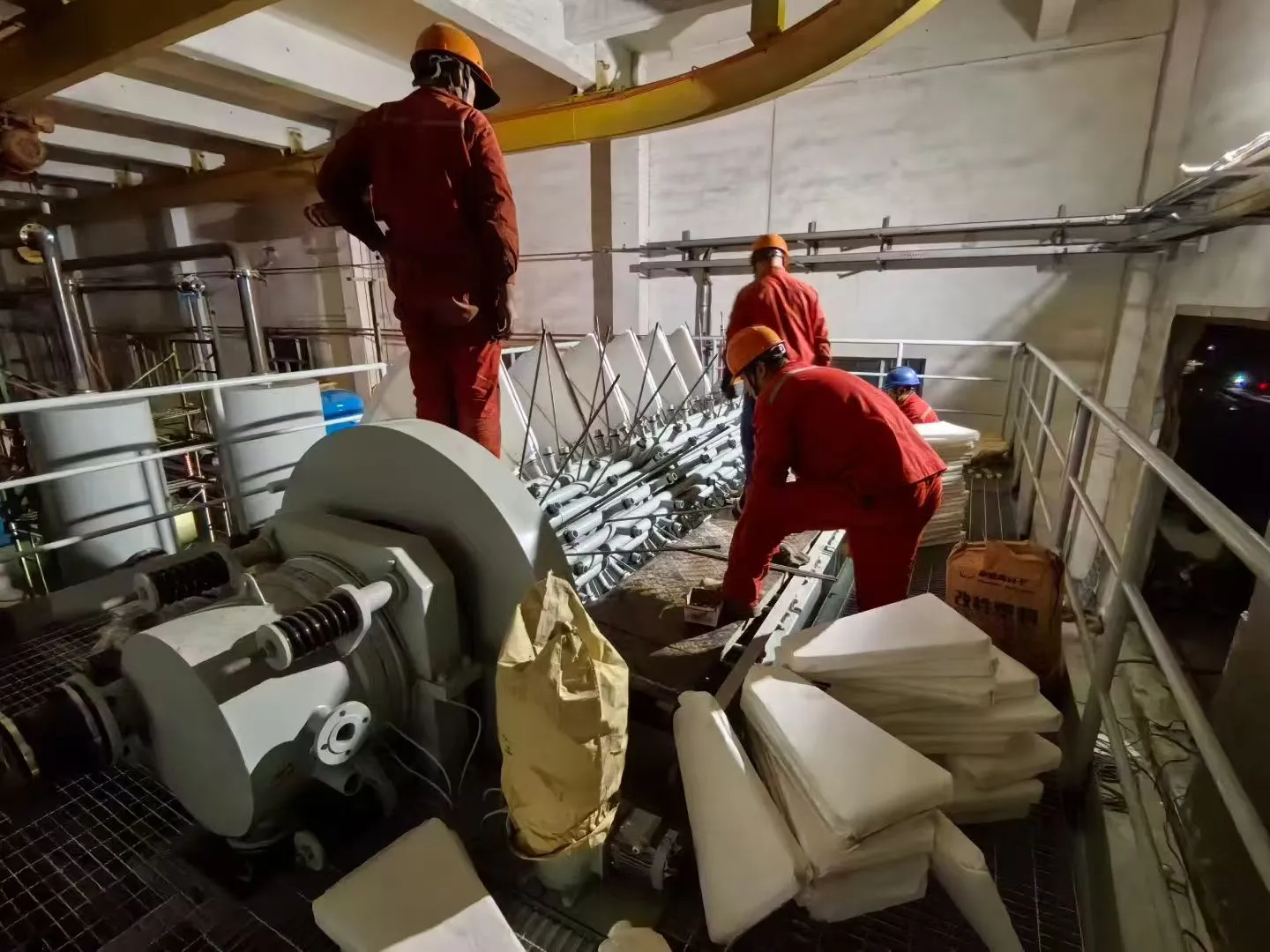
Choosing the right Vacuum Disc Filter is only the first step. Once the equipment is installed, the focus shifts to a different set of questions: How do you operate it efficiently? What affects filter cake moisture? How do you extend filter cloth life? And what does good after-sales support look like?
In Part 1, we covered the fundamentals — what a Vacuum Disc Filter is, which materials it can handle, how to choose the right configuration, and why working with an OEM matters. In this second part, we turn to the questions that come up once the equipment is running: vacuum optimization, moisture control, slurry agitation, cloth maintenance, automation, and what trends are reshaping the industry.
These answers draw on real-world operating experience from mineral processing plants around the world.
No — and this is one of the biggest misconceptions in mineral filtration.
While adequate vacuum is essential for dewatering, excessively high vacuum does not automatically produce a drier filter cake. Instead, it may result in:
▪Higher energy consumption
▪Increased vacuum pump load
▪Greater equipment wear
▪Higher operating costs
▪Minimal improvement in final moisture
Successful filtration depends on balancing several variables — slurry concentration, cake thickness, filtration time, particle size distribution, and cloth permeability — rather than maximizing a single operating parameter. The objective is optimized vacuum, not simply maximum vacuum.
Many people assume vacuum pressure alone determines final cake moisture. In reality, moisture content is influenced by multiple interacting factors:
▪Particle size distribution and concentrate fineness
▪Mineral characteristics and mineralogy
▪Slurry concentration and density
▪Filter cloth permeability and selection
▪Cake thickness
▪Disc rotation speed and drying time
▪Vacuum stability and air leakage
▪Process water temperature
▪Equipment maintenance condition
For this reason, two plants processing different iron ores may achieve different moisture results even with identical equipment. Simply increasing vacuum pressure does not always produce a drier cake — excessive vacuum may increase energy consumption while providing little additional moisture reduction.
Successful filtration is achieved by optimizing the entire filtration system rather than maximizing a single operating parameter.
Inside the slurry tank, mineral particles naturally tend to settle. Without effective agitation:
▪Solids concentration becomes uneven
▪Cake thickness fluctuates
▪Filtration capacity decreases
▪Moisture becomes inconsistent
▪Wear may increase in localized areas
A properly designed agitation system maintains a uniform slurry concentration throughout the filtration process, contributing to stable production and consistent cake quality.
Yes — with proper engineering. A well-designed Vacuum Disc Filter can be configured for numerous mineral applications. However, changing from one material to another often requires adjustments such as:
▪Filter cloth type
▪Vacuum settings
▪Rotation speed
▪Cake thickness
▪Feed concentration
▪Washing procedures
▪Operating parameters
Rather than using a "one-size-fits-all" approach, the equipment should be optimized for the specific characteristics of the material being processed. Different minerals require adjustments in filter media selection, vacuum system design, and operating parameters to achieve optimal performance.
There is no universal replacement schedule. Filter cloth service life depends on:
▪Abrasiveness of the material
▪Particle size
▪Chemical compatibility and conditions
▪Cleaning effectiveness and procedures
▪Operating hours and practices
▪Maintenance quality
Modern synthetic filter media typically provide long service life — in well-maintained systems, often reaching several years before replacement is required, although actual performance varies by application. Routine inspection and proper cleaning significantly extend operating life while maintaining filtration efficiency.
Filtration equipment is a long-term investment, and comprehensive after-sales support is essential to protecting it. A reliable support program should include:
▪Equipment commissioning
▪Operator training
▪Spare parts supply
▪Technical troubleshooting
▪Remote technical assistance
▪Preventive maintenance recommendations
▪Performance optimization
▪Long-term technical consultation
Reliable support minimizes downtime and helps maintain consistent production throughout the equipment's lifecycle. When evaluating manufacturers, it's worth asking not just about equipment specifications, but about the scope and responsiveness of their after-sales service.
Absolutely. Modern Vacuum Disc Filters can be integrated into plant automation systems using PLC or DCS platforms. Automation features may include:
▪Vacuum monitoring
▪Liquid level control
▪Motor protection
▪Automatic lubrication
▪Alarm systems
▪Remote monitoring and diagnostics
▪Data acquisition
▪Predictive maintenance functions
These capabilities improve operational stability while reducing manual intervention and helping operators identify potential issues before they affect production.
The industry continues to move toward:
▪Higher levels of automation
▪Predictive maintenance and AI-assisted diagnostics
▪Digital monitoring and online performance optimization
▪Improved filtration media
▪Lower energy consumption
▪Greater water recovery
▪Reduced maintenance requirements
▪Smarter process optimization — including digital twins and advanced analytics
As mining operations pursue higher efficiency and increasingly stringent environmental standards, filtration equipment is evolving from standalone machinery into integrated process-control systems. Rather than functioning as isolated machines, future filtration systems will increasingly become connected components within intelligent mineral processing plants.
Once the right Vacuum Disc Filter is selected and installed — matched to your mineral characteristics, production targets, and site conditions — sustained performance comes from attention to operating practice: optimized vacuum levels, consistent slurry agitation, appropriate cloth maintenance, and effective use of automation.
Together with the fundamentals covered in Part 1, these operational insights should help your team get the most from your filtration investment — whether you're processing iron, copper, lithium, phosphate, coal, graphite, or other mineral concentrates.
▪Wills' Mineral Processing Technology, B.A. Wills & J. Finch. Butterworth-Heinemann, 2016.
▪Solid-Liquid Separation. Elsevier, 2000.
▪SME Mineral Processing and Extractive Metallurgy Handbook, 2019.
▪International Mine Water Association — publications on mine water management and water recovery.
▪Metso technical resources on filtration and concentrate dewatering.
▪ANDRITZ technical literature on vacuum filtration systems.
#VacuumDiscFilter #MineralProcessing #Dewatering #SolidLiquidSeparation #Mining #WaterRecovery