
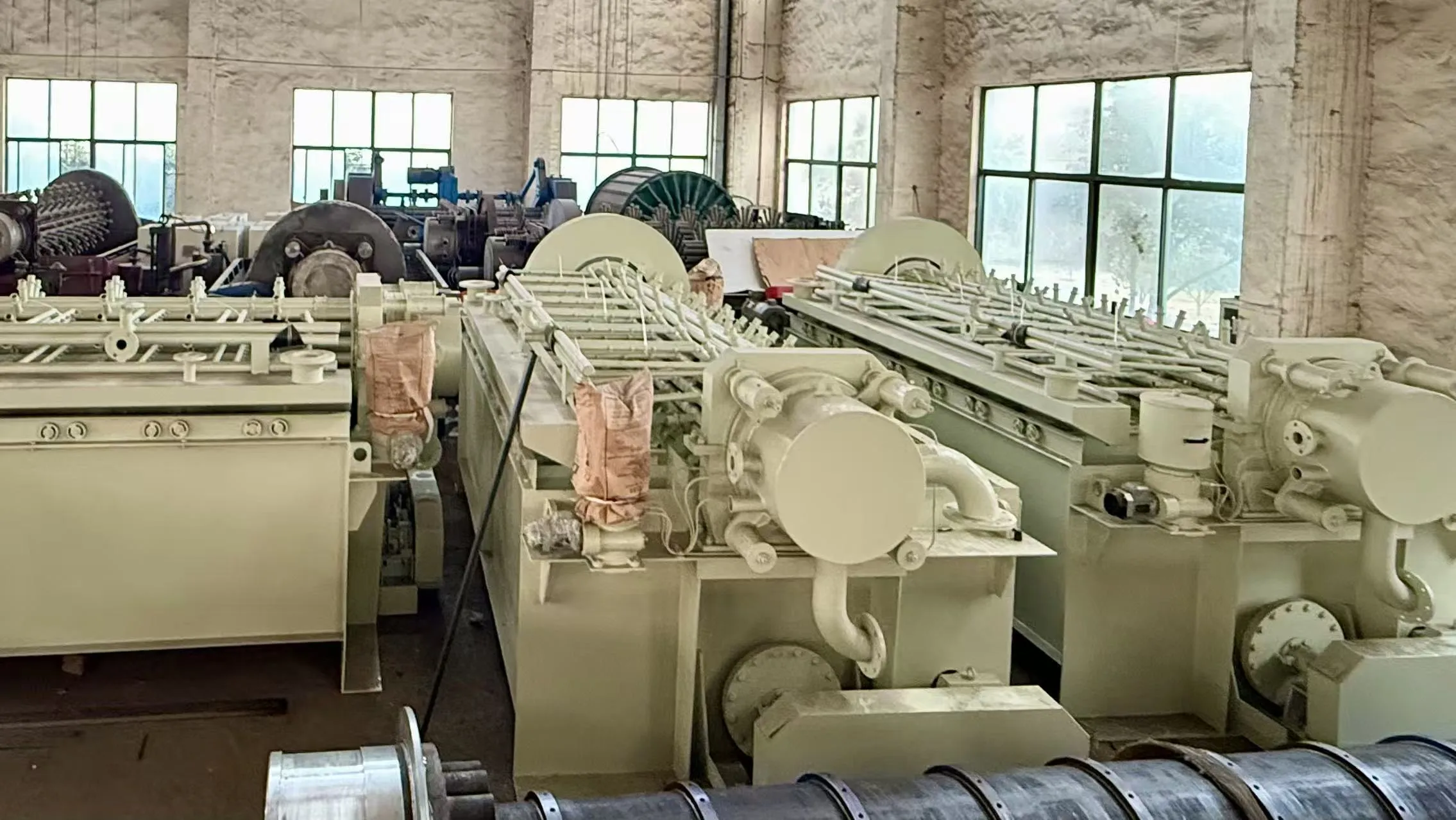
Vacuum disc filters are sized by effective filtration area and the specific dry-solids capacity demonstrated for a particular slurry. A nameplate area alone does not determine production. Particle size, mineralogy, feed density, cake resistance, vacuum, cycle time, submergence, cloth, cake moisture, and discharge reliability all influence the result.
Reliable sizing begins with representative filtration tests, converts the results to dry solids per unit area and time, and then applies realistic allowances for process variation and availability.
Quick answer
Required filter area equals the design dry-solids throughput divided by a tested, conservative specific filtration capacity. If a plant must process 60 dry tonnes per hour and validated testing supports 0.45 dry tonnes per square metre per hour, the theoretical area is 133 square metres. The selected installation must then account for feed variation, cleaning, maintenance, availability, and future operating margin. Do not size from slurry volume or a generic capacity factor alone.
Slurry flow changes when feed density changes, but the filter ultimately handles dry solids and liquid. Convert the plant duty to dry mass before sizing.
Dry-solids flow can be calculated from measured slurry mass flow and solids fraction by weight:
Dry solids flow = slurry mass flow × mass fraction solids
If only volumetric slurry flow is available, use a validated slurry density:
Dry solids flow = slurry volume flow × slurry density × mass fraction solids
Keep units consistent. Distinguish metric tonnes from short tons and wet mass from dry mass. Verify online density measurements with laboratory samples.
Specific filtration capacity is normally expressed as dry solids processed per unit filter area per unit time, such as kg/m²·h or t/m²·h.
Specific capacity = dry-solids throughput ÷ effective filter area
The value must be tied to stated conditions, including:
A capacity number without these conditions is not a dependable design basis.
Once the design throughput and tested specific capacity are established:
Theoretical area = design dry-solids throughput ÷ tested specific capacity
Example:
This is the area required at the test condition. It is not automatically the final installed area.
Plants rarely operate continuously at one laboratory condition. The design should address:
Instead of hiding all uncertainty inside one unexplained factor, show the selected test capacity, process derating, availability basis, and standby philosophy separately.
If the design-specific capacity after derating is 0.38 t/m²·h, the same 60 t/h duty requires approximately 158 m². Equipment is then selected from available disc diameters, disc counts, and effective areas.
The total area installed may be greater than the area normally operating. For example, a plant may install two filters so either can be washed or maintained while the other carries part of the load. Alternatively, both units may normally operate below maximum capacity to absorb short-term feed increases.
Define:
This prevents confusion between theoretical sizing and the production guarantee.
Not every square metre performs the same duty throughout a rotation. Disc sectors pass through cake formation, dewatering, discharge, and transition zones. Submergence and control-head timing determine how much of the cycle is available for cake formation and drying.
Manufacturers may provide nominal and effective filtration areas. Use the basis stated for the selected equipment, and do not multiply disc geometry independently unless the same definition is confirmed.
At a fixed slurry volume, denser feed supplies more dry solids to the cloth. Dilute feed may form thin cake and reduce dry-solids capacity even when liquid flow remains high. Excessively dense feed can become difficult to pump, mix, and distribute.
Testing should cover the expected density range rather than only the best sample. The selected filter must operate stably at both normal and credible upset conditions.
Longer submergence or slower rotation can build thicker cake, but filtration rate normally decreases as cake resistance increases. Thicker cake may also require more drying time and can discharge differently. Very thin cake can increase cycles per hour but may crack, pass more air, or release poorly.
The optimum is the combination that meets dry-solids capacity, moisture, clarity, and discharge targets—not the thickest possible cake.
Laboratory and pilot tests should reproduce the relevant mechanisms and report scalable results. A useful report includes:
Scale-up must also consider full-size slurry distribution, sector drainage, piping pressure losses, filtrate receivers, vacuum-pump performance, agitation, wash coverage, and cake handling. Bench results are a process basis, not a complete mechanical design.
Filter area cannot deliver its rated capacity if the auxiliaries are undersized. Check:
Excessive air leakage can consume vacuum capacity without producing filtrate, while poor liquid removal can flood receivers and destabilize the filter.
After commissioning, compare actual results with the design basis under agreed feed conditions. Use representative composite samples and record:
Calculate capacity from dry solids and actual online area. Do not use only wet cake tonnes, because moisture changes can create a false improvement.
Tongzhiren Filtration can review the complete sizing basis and recommend disc diameter, disc count, installed area, and auxiliary equipment. Provide annual and hourly dry-solids duty, slurry properties, operating schedule, site altitude, cake-moisture target, filtrate-quality target, and representative test data.
| Info@tzrfiltration.com | |
| +86 139 1246 6955 |
Can vacuum disc filter capacity be calculated from slurry flow alone?
No. Slurry flow must be converted to dry-solids duty, and the required area must use a specific capacity validated for the actual slurry and target performance.
What units are used for specific filtration capacity?
Common units are kilograms of dry solids per square metre per hour or tonnes of dry solids per square metre per hour. Always state whether tonnes are metric and whether area is nominal or effective.
Why include spare filter area?
Additional area can cover feed variability, cloth aging, cleaning, maintenance, and availability requirements. The amount depends on the plant operating philosophy and consequence of downtime.
Does more vacuum always increase capacity?
No. Benefit may be limited by cake resistance, cloth, piping, liquid handling, air leakage, or discharge. Excessive air flow can also increase energy use without improving dry-solids production.