
Copper concentrate leaves flotation as a water-rich slurry that must be thickened and filtered before storage, transport, blending, or smelting. The filtration stage has to remove enough water for dependable material handling without sacrificing valuable solids, plant capacity, or water recovery.
Vacuum disc filters are one option for continuous copper concentrate dewatering. Their suitability depends on concentrate particle size, mineralogy, feed density, cake permeability, required moisture, site conditions, and the downstream transport route. Representative filtration testing is essential because two copper concentrates with similar copper grades can behave very differently during dewatering.
Quick answer
A vacuum disc filter dewaters copper concentrate by drawing liquid through cloth-covered sectors while the solids form a cake on the disc surface. The cake continues to dry as each sector rotates out of the slurry, then compressed-air blow-back releases it into a discharge chute. The best performance comes from stable thickener underflow, suitable filter cloth, controlled vacuum, adequate cake-forming time, and a moisture target based on the actual transport and smelter requirements.
Flotation concentrates commonly pass through a thickener before filtration. The thickener removes bulk water economically and supplies a denser underflow to the filter. Filtration then removes additional liquid to create a cake that can be conveyed, stored, sampled, and transported.
The dewatering objective may include:
The correct target is a defined operating range, not simply the lowest moisture that the filter can achieve.
Fine mineral concentrates can appear stable while still containing enough moisture to behave like a fluid under repeated vibration and compaction. For marine transport, the shipper must follow the applicable cargo-testing, certification, sampling, and transport requirements. The Transportable Moisture Limit, commonly abbreviated as TML, is determined through approved procedures for the specific cargo.
Metso notes that a typical copper concentrate may have a TML around 9% moisture as an example, but this is not a universal design value. The actual limit depends on the cargo and the approved test result. Plant operators should therefore use the current certified value and a controlled production margin rather than copying a moisture number from another mine.
Filtration equipment supports moisture control, but it does not replace compliant cargo sampling and testing.
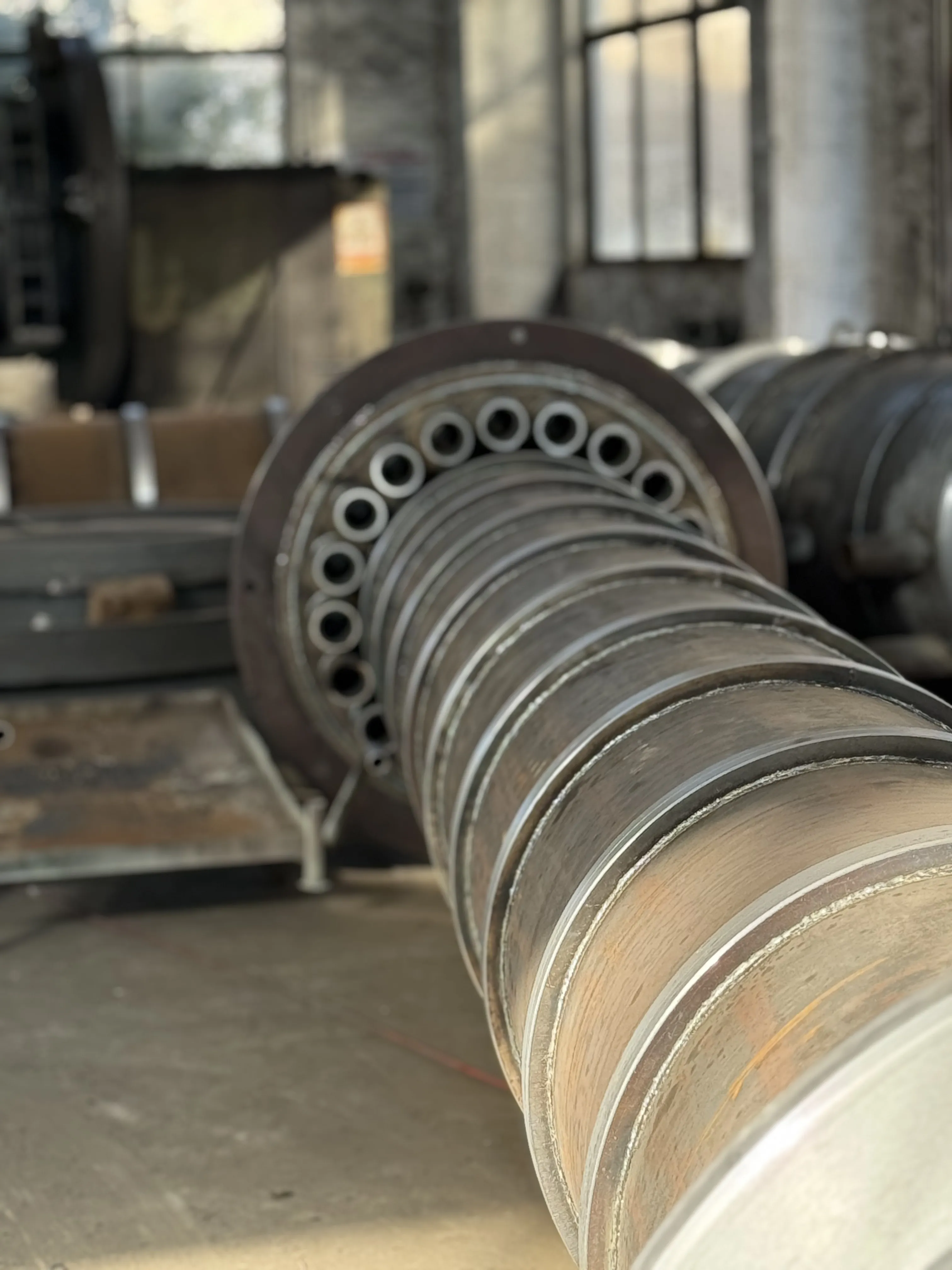
A conventional vacuum disc filter contains multiple vertical discs mounted on a horizontal shaft. Each disc is divided into sectors covered by filter bags. As the discs rotate:
Continuous rotation provides steady production and a relatively compact filtration area. The complete station also needs a feed tank, agitation, slurry pumps, vacuum system, filtrate receivers and pumps, compressed air, cloth washing, cake chutes, conveyors, and process controls.
Ultrafine particles increase cake resistance and can blind the filter cloth. Coarser particles may form a more permeable cake but can settle quickly in the feed system. Report the complete size distribution instead of only one average size.
Chalcopyrite, bornite, pyrite, gangue minerals, clays, and oxidation products can produce different cake structures. Plate-like or clay-rich particles often reduce permeability.
Dilute feed may produce thin cake and low dry-solids capacity. Excessively dense feed can become difficult to pump, agitate, and distribute. Test the realistic thickener-underflow range.
Residual collectors, frothers, flocculants, dissolved salts, pH, and temperature may affect wetting, aggregation, cloth blinding, filtrate quality, and cake release.
Fine solids passing into the filtrate may contain copper and payable precious metals. Filtrate-solids control should therefore be treated as a recovery metric, not only a water-quality metric.
Vacuum disc filters, ceramic disc filters, pressure filters, and hyperbaric filters can all serve mineral-concentrate duties. The preferred technology depends on the tested relationship between moisture, throughput, energy, availability, and operating cost.
A conventional vacuum disc filter is attractive when the concentrate forms a permeable cake at the available pressure differential and continuous high-capacity operation is required. A pressure or hyperbaric filter may be considered when very fine material or a low moisture target demands a larger pressure differential. Ceramic disc filtration may offer low vacuum-pump energy for suitable, consistent feeds but requires ceramic-sector regeneration and different maintenance practices.
Technology selection should be test-led and should evaluate the entire filtration plant, not only the filter body.
Provide the equipment supplier with:
Bench or pilot testing should report specific dry-solids capacity, cake thickness, achievable moisture, filtrate clarity, cloth selection, cake release, and repeatability.
Slower speed increases cake-forming and drying time but reduces cycles per hour. Faster speed can increase cycle frequency while producing thin, fragile cake. Optimize using dry-solids throughput and moisture together.
Stable submergence helps produce uniform cake. Rapid level changes alter cake-forming time and may cause inconsistent discharge.
Increasing vacuum can improve dewatering until cake resistance, cloth resistance, or air leakage becomes controlling. Track absolute pressure rather than relying on an uncorrected gauge reading.
Damaged cloth causes solids loss; blinded cloth restricts filtrate and air flow. Choose cloth through testing and maintain verified spray coverage.
Blow-back must release the cake without wasting compressed air, damaging bags, or disturbing the wrong control-head zone.
When moisture rises, review time-aligned data before changing several settings. Check:
Confirm the cause with a controlled test. A moisture increase caused by finer feed will not be corrected permanently by repairing a vacuum pump that is already performing correctly.
Cloudy filtrate can return valuable concentrate to the water circuit. Measure suspended solids or turbidity and periodically assay the entrained material. Separate early cloudy filtrate from clearer drying-zone filtrate when the equipment arrangement and test results justify it.
The economic loss can be estimated from filtrate flow, solids concentration, concentrate grade, metal recovery, and payable-metal value. This makes cloth damage or sector leakage visible as a production issue.
Tongzhiren Filtration designs vacuum disc filter systems for concentrate and mineral-slurry applications. For a technical review, send representative test data, hourly and annual dry-solids duty, feed density, particle-size distribution, cake-moisture requirement, filtrate-quality target, site altitude, and plant operating schedule.
| Info@tzrfiltration.com | |
| +86 139 1246 6955 |
Can a vacuum disc filter meet copper concentrate transport moisture requirements?
It can for suitable concentrates, but capability must be demonstrated by representative filtration testing. The production target must be based on the actual certified transport and handling requirements for the concentrate.
What moisture should copper concentrate have after filtration?
There is no universal value. The target depends on the certified cargo limit, customer specification, storage and conveying behavior, climate, and downstream process. Use a controlled operating range with an appropriate margin.
Why does fine copper concentrate filter slowly?
Fine particles create small cake pores and higher hydraulic resistance. Clay minerals, oxidation products, reagents, and low feed density can intensify the effect.
How is a copper concentrate filter sized?
Required area is calculated from the design dry-solids throughput divided by a tested, conservatively selected specific filtration capacity. Availability and process-variation allowances are then added transparently.
Why is copper present in the filtrate?
Likely causes include unsuitable or damaged cloth, loose seams, sector leakage, unstable thin cake, very fine feed, control-head seal wear, or incorrect valve routing.