
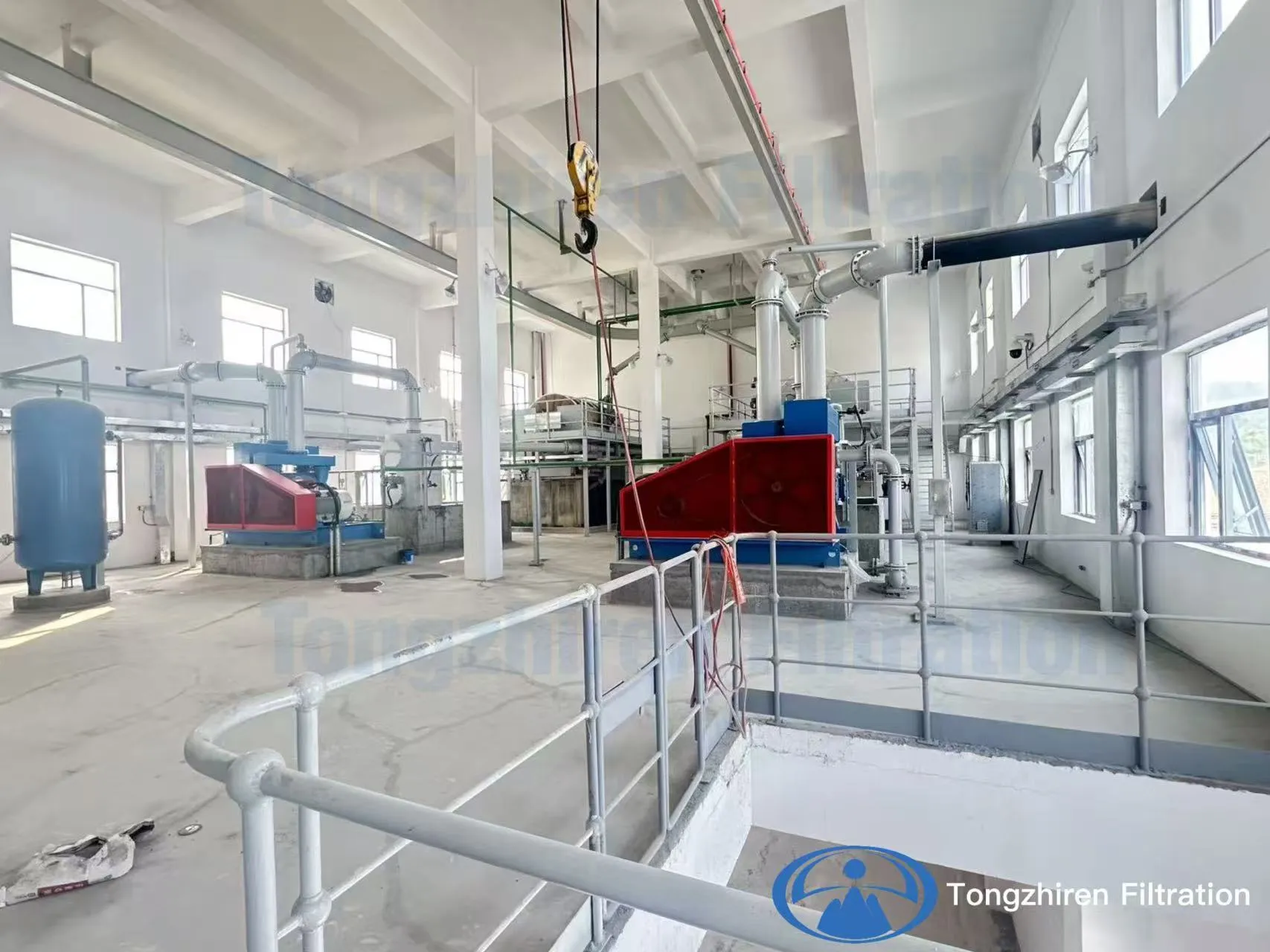
A vacuum disc filter can lose effective vacuum even when the pump motor continues running normally. In a station using a liquid ring vacuum pump, one variable worth checking is the temperature of the operating liquid, often called seal water or service water.
Warmer water has a higher vapor pressure. That changes the conditions under which the pump can remove gas and maintain low absolute pressure. The correct response starts with measurements and the selected pump's operating data, rather than a universal water-temperature setting.
As operating-water temperature rises, its vapor pressure rises. This can limit the achievable vacuum and change pump performance at the required suction condition. The effect depends on the pump, gas load, water flow, and operating pressure.
Busch explains the relationship between operating-liquid temperature, vapor pressure, and ultimate pressure in its DOLPHIN LR instruction manual. That document applies to the listed pump models; use the manual and performance information for the actual pump installed at your plant.
An ultimate-pressure figure is not a guarantee that the same pressure can be maintained while handling the filter's operating gas load.
The liquid inside a liquid ring pump is part of its operating mechanism. It is different from filter-cloth wash water, slurry dilution water, and the liquid collected as filtrate, even if some services share a plant-water source.
On the process drawing, identify the pump's operating-liquid inlet, return, separator, makeup connection, and any heat exchanger. Record where each temperature measurement is taken.
A temperature measured at the plant supply header may not represent the liquid reaching the pump. Recirculation and heat pickup can create a difference between the two locations.
Busch's liquid ring technology overview describes how the operating liquid forms the ring used for gas compression. This makes its condition part of pump operation, not simply a separate cooling-service detail.
The station may use a once-through supply, partial recirculation, or a recirculating arrangement with cooling. Identify the actual design before interpreting a rising temperature.
For example, a partial-recirculation system mixes returned operating liquid with makeup liquid. Busch describes this arrangement in its DOLPHIN VL partial-recirculation system. The required makeup quantity and allowable conditions are equipment-specific.
For a system with a heat exchanger, compare operating-liquid inlet and outlet temperatures with the cooling-side conditions. A change in cooling-water availability, fouling, or control behavior may explain a temperature trend, but the measurements must establish which condition changed.
Record whether each instrument reports absolute pressure or vacuum relative to atmosphere. A lower absolute pressure means a deeper vacuum; gauge-vacuum conventions can display the same change differently.
Also record the measurement location. Pressure at the pump inlet may differ from pressure near the filter because of the connecting system and its operating load.
For a useful trend, align the timestamps of:
If only one variable is recorded, a correlation can easily be mistaken for a cause.
Consider a hypothetical station that starts with satisfactory vacuum but shows a decline after an hour. During the same period, recirculating water temperature rises. That pattern makes the liquid circuit a reasonable investigation target, but it does not prove that the pump needs replacement.
First confirm the instruments and compare the actual conditions with the pump's approved operating envelope. Then review cooling, makeup, liquid flow, and the concurrent gas load.
Check whether the filter itself changed during the warm-up period. A feed disturbance, exposed cloth, or another air path could increase demand on the vacuum system at the same time that the water warms.
Have qualified personnel perform any equipment checks under the manufacturer's procedure. Do not use a closed suction line as an improvised diagnostic test; permissible operating conditions depend on the pump design.
| Observation | Useful next comparison |
|---|---|
| Pump and filter pressure worsen as service water warms | Pump performance at the measured temperature, flow, and load |
| Pump pressure is steady but filter pressure changes | Conditions and pressure losses between pump and filter |
| Water conditions are steady but cake coverage changes | Filter air load, feed, and cake formation |
| Pressure changes abruptly after maintenance | Instrument readings, connection configuration, and work records |
These are investigation directions, not diagnoses. Use the observations to narrow the review before changing equipment settings.
A reference temperature on a pump curve describes the conditions used for that data. It does not automatically become the correct plant operating target.
Request the supplier's performance correction or selection check for the site's actual operating-liquid temperature and gas conditions. Confirm required flow and any restrictions on pressure, liquid quality, and recirculation.
Cavitation is another reason to respect the operating envelope. A pump's lowest achievable pressure is not necessarily a suitable continuous operating point. The appropriate protection arrangement must follow the installed equipment's documentation.
Changing temperature alone will not repair worn components, clear a restricted line, or remove an external air leak.
For a new filtration station, provide the expected warmest service-water condition as well as normal conditions. State whether water will be recirculated and identify the cooling utility available at the site.
Ask the supplier to connect pump selection to the filter's required vacuum and gas load. Keep installed power, gas capacity, water demand, and operating assumptions together in the quotation.
The supplier scope checklist helps define responsibility for pumps, cooling, receivers, and connections. The energy and operating-cost guide explains the wider station-cost review.
Send the pump model, system drawing, operating-liquid arrangement, recent pressure and temperature trends, measured flow where available, and a description of when the problem occurs. Include filter feed and cake observations from the same period.
Contact Tongzhiren Filtration with the filtration-station information to discuss the filter-side requirement and coordination with the vacuum-system supplier.
No. Seal water is the pump's operating liquid. Filter wash water serves a different purpose, although both may originate from a common supply.
No. Temperature is one variable among gas load, flow, system restrictions, leaks, and pump condition. Check the actual operating point.
Not necessarily. The working pressure depends on operating gas load and liquid conditions. Use the relevant performance curve and supplier selection data.
Record pump-inlet pressure and operating-liquid inlet temperature together, along with the operating conditions and measurement basis.