
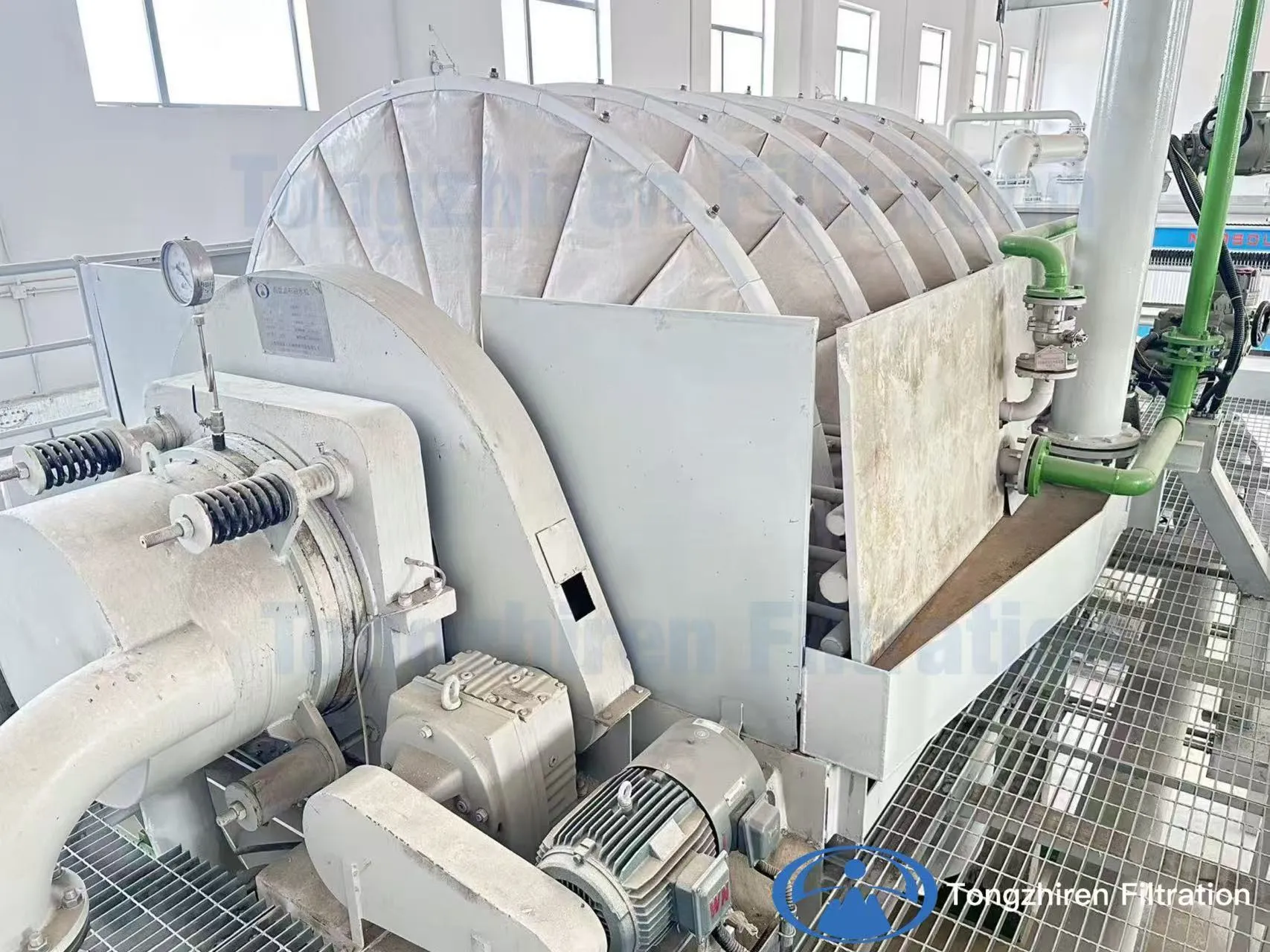
A factory acceptance test, usually shortened to FAT, checks agreed aspects of a vacuum disc filter before shipment. Its value comes from identifying discrepancies while the equipment, drawings, and supplier's team are still together at the manufacturing site.
A useful FAT defines what will be demonstrated, what evidence will be recorded, and which checks must wait until installation. A video of the machine rotating can be helpful evidence, but it does not answer every mechanical, control, or process-performance question.
A project-specific FAT can verify supplied configuration, selected dimensions, agreed mechanical operation, control functions, documentation, and completion of inspection records. The scope depends on the purchase specification, assembled equipment, and factory test facilities.
Separate those checks from process guarantees. A no-load run or water test cannot by itself establish mineral-slurry throughput, cake moisture, or filtrate quality under the plant's future operating conditions.
For automation systems, IEC 62381:2024 describes factory and site acceptance and integration testing against an applicable specification. Its scope is process-industry automation; it is not a complete mechanical acceptance standard for every disc filter. The checklist below is a project-planning aid, not a reproduction of that standard.
Issue a test plan early enough for the supplier and buyer to resolve practical questions. Identify the equipment included, the drawing revisions, test instruments, applicable criteria, and responsible witnesses.
For each test, specify the expected result and record format. Avoid leaving acceptance to impressions such as “runs smoothly” without agreeing what observations or measurements are required.
State which tests are witnessed, which records may be reviewed, and which activities cannot proceed without the designated review. Confirm these arrangements in the project documents rather than assuming the same practice applies to every order.
Compare the equipment identity and assembly with the purchase scope and approved drawings. Confirm the relevant disc and sector arrangement, drives, trough, agitation system, cloth specification, and supplied auxiliary equipment.
Inspect the interfaces that affect installation: connection positions, support locations, discharge arrangement, and the supplied electrical and control equipment. Use the agreed dimensional records and tolerances for the specific design.
The supplier quotation scope checklist helps distinguish included equipment from plant-supplied items. The FAT should check that boundary explicitly so an excluded auxiliary is not confused with an incomplete shipment.
| Demonstration or review | What it can support | What it does not establish alone |
|---|---|---|
| Configuration and document review | Conformity with the agreed supply records | Final installed operation |
| Authorized no-load mechanical run | Agreed rotation, drive, and assembly observations | Slurry capacity or cake moisture |
| Water-system test where specified | Selected liquid-handling and function checks | Performance on mineral cake |
| Simulated control test | Response to the tested signals and sequence | Every real plant interface |
| Representative slurry trial, if provided | Performance within the documented trial conditions | All future feeds or unrestricted scale-up |
This distinction prevents a limited factory demonstration from being interpreted as evidence of a broader result.
Have the supplier operate the equipment using its authorized test procedure. Record rotation direction, speed settings, relevant drive observations, and any other measurements required by the agreed plan.
Identify the actual test duration, load, and services connected. If the equipment is only partly assembled for the factory test, state which components or systems were absent.
Do not invent universal vibration, temperature, runout, or noise limits. Use the criteria agreed for the equipment and test conditions. Where an observation is outside the criterion, document the finding and the required action.
Where controls form part of the supply, compare the installed software and hardware with the approved functional description. Record program versions and the configuration used during testing.
For a hypothetical example, the agreed logic may require a downstream conveyor-ready signal before cake-producing operation is permitted. A factory test can simulate that input and document the commanded response. The actual conveyor and site communication still need verification after installation.
Label simulated inputs and temporary arrangements clearly. Record the removal of temporary overrides according to the test procedure. A simulated control test is not, by itself, validation of the complete installed safety system.
Each record should identify the equipment, test step, criteria, conditions, instruments where applicable, result, date, and responsible personnel. Connect photographs and video to the relevant test step rather than leaving them as unlabelled files.
For remote witnessing, agree how the viewer will see equipment identification, instruments, and the sequence being demonstrated. A recording is useful only to the extent that it shows the conditions and result being claimed.
Keep the final report with the applicable drawing and software revisions. If a component or configuration changes afterward, review whether the earlier test remains representative.
A punch list records unfinished work or discrepancies. Give each entry an identity, description, responsible party, required action, and closure evidence.
Distinguish findings that must be resolved before shipment from those the parties agree to address later. Record who can authorize that disposition. A signed attendance sheet should not be treated as proof that every test passed or every finding was closed.
If a repair or software change affects a tested function, identify the retest required. Close the item with evidence of the relevant result, not only a statement that work was performed.
Large equipment may be partly dismantled after the FAT. Confirm identification marks, packing lists, preservation instructions, loose components, spare items, and reassembly documentation.
Record which settings, alignments, or connections must be restored and checked at the plant. The factory record should help the site team distinguish the tested condition from the shipping condition.
For replacement components and spare kits, the spare-parts identification guide provides useful record fields.
Create a separate list of checks requiring installed equipment, plant utilities, actual control interfaces, or representative slurry. Link it to commissioning and the agreed performance-test procedure.
The vacuum disc filter commissioning checklist covers the installation stage. Keeping factory and site evidence connected reduces the chance that an important test is assumed complete merely because it appeared in an earlier document.
Send the purchase scope, approved specification, witness requirements, requested records, and expected shipment sequence. Ask what can be demonstrated at the factory and what must remain a site activity.
Contact Tongzhiren Filtration to discuss the inspection and test scope for a proposed supply. Include FAT requirements in the inquiry so facilities, responsibilities, and documentation can be agreed before manufacture is complete.
Only a suitable process test under documented representative conditions can provide that evidence. A no-load or water run does not establish mineral-cake moisture.
It may be possible by agreement. Define visibility, records, identification, and which checks still require physical inspection.
No. Factory testing occurs before shipment. Site verification addresses the installed system, plant interfaces, and the tests assigned to actual operating conditions.
A traceable report showing the scope, test conditions, results, unresolved findings, and the status of any required retests.