Summary: A comparison of the Ningxia Hui Autonomous Region with several regions around the globe shows that water recovery, stable dewatering, and dust-tolerant equipment are shared key performance objectives. In these areas, vacuum disc filters must consistently separate solids and liquids while conserving and recovering limited process water under challenging circumstances.
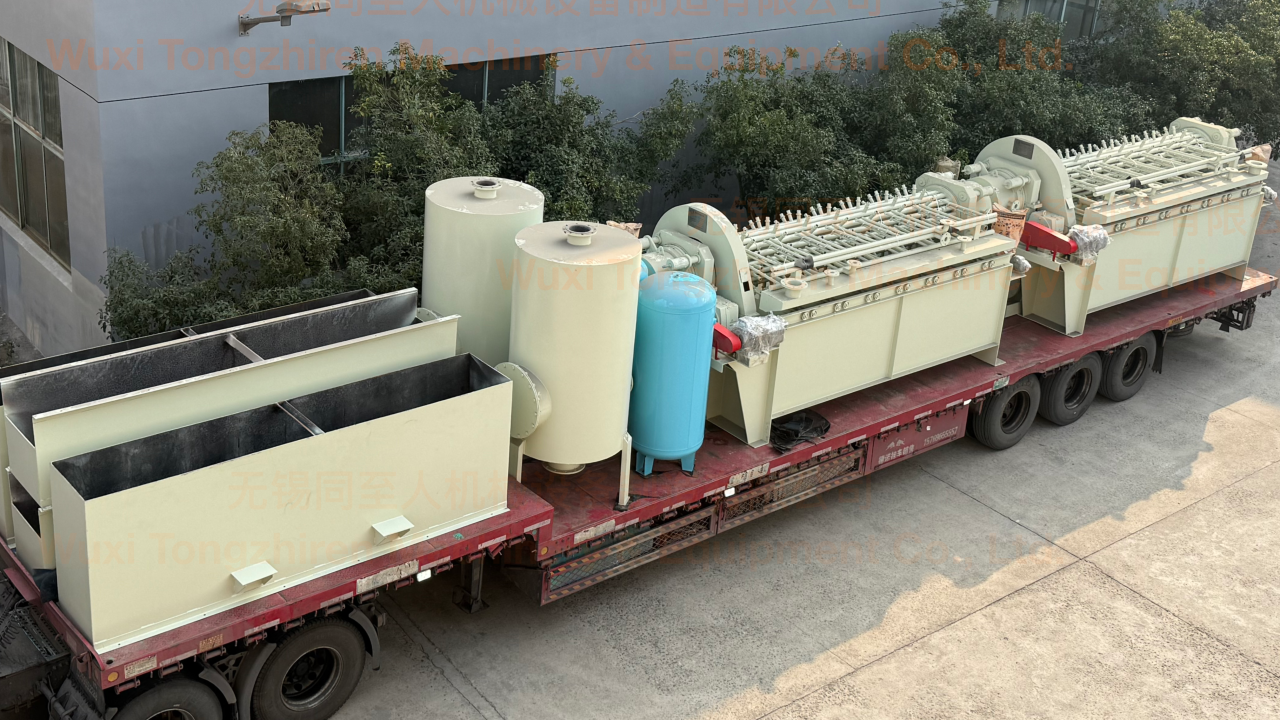
Just last week, we commissioned several vacuum disc filter systems in Ningxia to support FGD gypsum slurry dewatering under these conditions. December and January are also the driest, coldest, and dustiest months in Ningxia. Our filters are engineered to address such challenges upfront without compromising operational performance. This reflects a more macroscopic view: filtration equipment should be designed for stable, continuous operation and high water recovery, since many of the operational conditions for which it is demanded are where resource efficiency problems exist.

In our field of work, mineral processing, performance is evaluated in real operating conditions, where harsh climates, high elevations, and limited allocable resources directly challenge its fundamental applicability and sustainability, rather than in laboratory benchmarks.
Shared Operating Attributes Across Dry Plateau Regions
Our vacuum disc filters are scattered across sites with mid to high elevation, and considerably arid qualities, where processing plants unavoidably face:
Limited or seasonal water availability
Intense evaporation and large day–night temperature variations
Dust-intensive operating conditions
Abrasive, high-solids slurry characteristics
Long, continuous operating cycles with limited shutdown windows
Such challenging conditions are, in reality, relatively common in dry-plateau mining regions or coal-fired power plant locations across Central Asia, Southern Africa, inland Australia, and in the high deserts of the Americas. Although geological characteristics vary, filtration challenges and engineering priorities are often similar.
Ningxia as One Representative Operating Environment
Ningxia Hui Autonomous Region is a perfect embodiment of the challenging operating environment described above. Its moderate-to-high elevation, significant dry climate, and high moisture loss rates result in real-world restrictions on resource allocations such as water and energy use, maintenance planning, and equipment reliability. Ningxia cannot be deemed unique in a global context. Still, it is a perfect example of a region where filtration systems must perform reliably over long service lives while withstanding environmental stress.

Comparable Regions with Similar Patterns of Operating Demands
Comparable operating conditions can be observed in:
Southern African Highveld: High altitude, dust, and excellent water management needs.
Namibian Plateau: Arid conditions and strict water-reuse requirements.
Central Asian plateau mining districts (Parts of Kazakhstan and western China): Extreme dryness and severe cold weather.
Inland Australian mining regions: water recovery and equipment resistance to the external environment are critical.
High-desert areas of western North America: Evaporation loss challenges and water reuse needs.
In these regions and in other scattered areas not listed above, engineering priorities to overcome challenging conditions are consistent across locations.
Converging Engineering Priorities
In dry, mid-elevation environments, effective filtration systems focus on:
Reliable solids–liquid separation under variable feed conditions
Stable filter cake formation and controllable moisture level
Dust-resistant mechanical design and highly simplified mechanical maintenance access
Standardized consumables with stable replacement cycles and an easy replacement procedure
High water recovery rate for water reuse
These requirements are not region-specific; they are recurring design drivers in challenging mineral-processing environments across multiple continents.
Conclusion: Going beyond stable operations in ideal weather and resource-rich conditions, our vacuum disc filter designs place considerable emphasis on maintaining stable operations regardless of challenges in areas like Ningxia. In the long term, this reflects the ability to conform across continents with similar environmental constraints.
In this context, Ningxia is a recent and practical reference into a broader scope of operational experiences, with which we have had our share of challenges and adaptations. This underscores the value of designing vacuum disc filters for operational durability, water recovery, and sustained reliability, rather than focusing solely on performance in an ideal, almost laboratory, setting.
Filtration systems that operate successfully in dry, mid-elevation regions such as Ningxia demonstrate a wider ability to provide stable dewatering and effective water recovery in some of the world’s most demanding mineral-processing environments.