Summary: From an engineering perspective, the value of a vacuum disc filter is not defined at delivery, but over the years of operation. Stable long-term performance depends on how effectively wear is managed, consumables are replaced, and spare parts are supplied with dimensional consistency. This article outlines how lifecycle support and consumable management are integral to reliable VDF operation.
From an engineering perspective, equipment value is not defined at delivery; it is defined over years of operation. In industrial filtration, including mineral processing and FGD gypsum dewatering, performance stability results from system behavior throughout its service life, not just at commissioning. Delivering a vacuum disc filter is only the beginning; ensuring long-term, stable operation is the true objective.
The Vacuum Disc Filter as a Working System
In our view, a vacuum disc filter (VDF) is not a static product. It is a working system that evolves through wear, maintenance, and renewal. Mechanical loading, abrasive slurry, chemical exposure, and cyclic operation all contribute to gradual change over time. These changes are unavoidable. What matters is whether the system is designed and supported with the expectation of ongoing evolution.
A VDF operates as an integrated system. Its filtration performance depends on both its primary structure and the condition of consumables and wear components. Components such as filter sectors, filter cloths, bearing systems, drive components, piping, and sealing elements all influence vacuum stability, cake formation, and throughput consistency (see Figure 1).

Wear Is a Design Condition
Wear is a design condition, not a failure mode.
Stable operation requires efficient component replacement and renewal, minimizing shutdowns and avoiding unnecessary full-process-unit replacements. Maintenance efficiency directly affects plant availability and, over the lifecycle, determines the total cost of ownership. Standardized consumables, predictable replacement cycles, and dimensional consistency across service intervals allow maintenance to be planned rather than reactive. When replacement components fit as intended, downtime is reduced, and system behavior remains stable over time.
Consumables and Spare Parts Across Replacement Cycles
For this reason, we emphasize in-house manufacturing and supply of key VDF consumables and spare parts across different replacement cycles. These include major mechanical components such as ring gears and pinions, wear interfaces such as bearing liners and shaft sleeves, filtration components including filter sectors and pre-tailored filter cloth bags supplied ready for installation (see Figure 2), and system components such as filtrate pipes. Large structural parts, such as slurry tanks, can also be manufactured and delivered as spare components upon request.

Supporting both small consumables and significant structural elements enables maintenance activities to scale appropriately, whether for routine replacement or more extensive refurbishment.
Dimensional Consistency and In-House Manufacturing
When original spare parts are unavailable, sourcing alternatives is rarely straightforward. Dimensional standards, tolerances, materials, and interfaces vary between manufacturers. Replacing components through third parties often requires complete measurement, verification, and redrawing before manufacturing can begin. This reverse-engineering process is time- and resource-intensive, frequently extending maintenance cycles beyond what operations can easily accommodate.
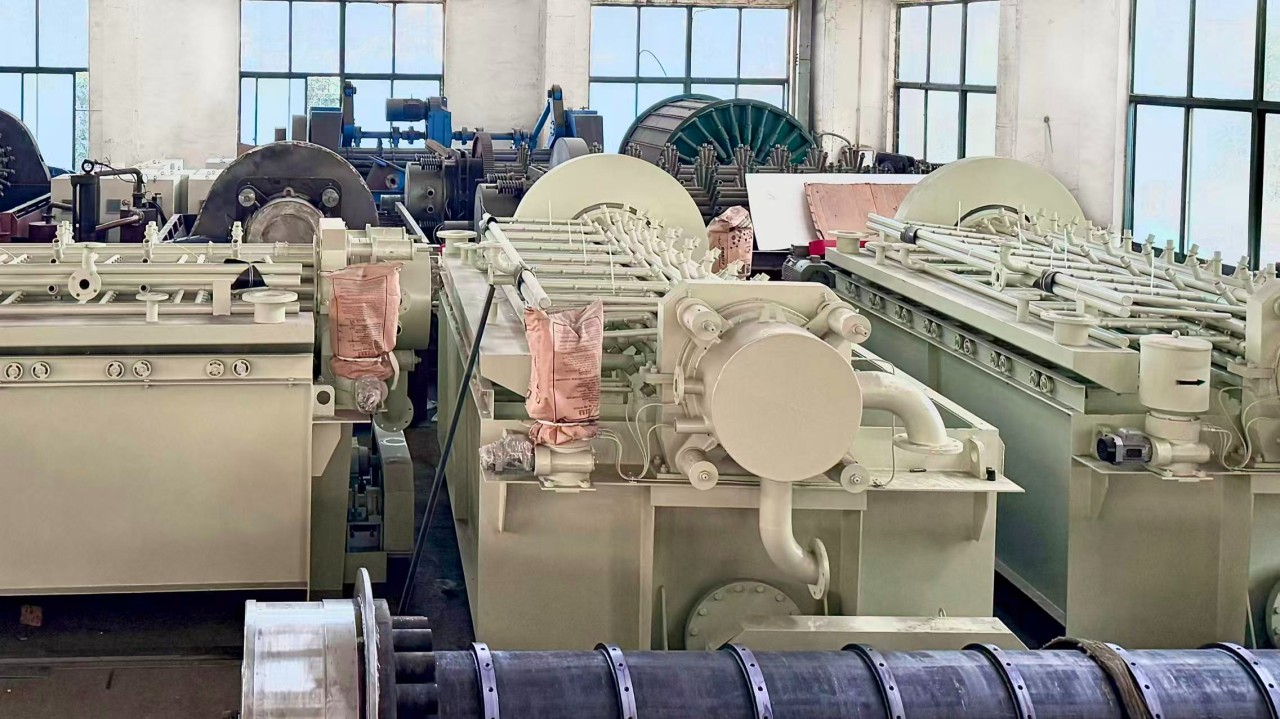
For this reason, we maintain comprehensive in-house manufacturing capabilities (Figure 3). Controlling the production of major components and consumables preserves dimensional consistency throughout the equipment’s service life and ensures a reliable supply of replacement parts.

Lifecycle Support as a Manufacturing Responsibility
Over long service periods, smaller replaceable parts often determine whether a VDF operates reliably. Bearings, liners, seals, filter media, and transmission components may receive little attention during commissioning, but they define operational behavior years later. Lifecycle support is not an add-on service after delivery; it is integral to how the machine is conceived, manufactured, and supported.
A vacuum disc filter that is easy to maintain, renew, and keep dimensionally consistent delivers value well beyond its initial installation.
Conclusion: In industrial filtration, long-term reliability depends not only on the machine but also on continuous design, manufacturing, and consumable support throughout its operating life.